
Table of Contents
Summary
Introduction
Imagine this: your construction project is on schedule, the design is finalised, and the entire team is ready, but the laminate sheets arrive two weeks late, with the wrong finish. The whole timeline falls apart, and everyone is left waiting. This is not a rare scenario. It happens more often than most buyers expect, and it almost always comes down to one thing: choosing a supplier without doing enough research first.
The laminate industry is growing faster than ever in 2026. New construction projects, rising demand in the furniture sector, and the rapid expansion of the hospitality industry are all pushing demand upward. With more laminate manufacturers entering the market every year, buyers now have more options, but also more chances to make the wrong choice.
What You Need to Know Before You Start Comparing
A laminate manufacturer is a company that makes laminate sheets, thin, hard surfaces that are bonded on top of materials like wood, MDF, or plywood to give them a decorative and protective finish. You encounter laminates every single day: the surface of your kitchen counter, the doors of office cabinets, the desk you work at, hospital furniture, and even the flooring in shopping malls. Almost all of these have a laminate layer on top.
There are three main types of laminates that different manufacturers produce. HPL, or High Pressure Laminate, is made under intense heat and pressure, making it thick, highly durable, and scratch-resistant. It is the preferred choice for commercial spaces, kitchens, and healthcare facilities. LPL, or Low Pressure Laminate, is thinner, lighter, and more affordable. It is commonly used in ready-made furniture. CPL, or Continuous Pressure Laminate, is produced in a continuous production line and offers a good balance between strength and cost. It is widely used in flooring and wall panels.
Understanding which type of laminate your project needs is the very first step, because not every manufacturer makes every type. Choosing a supplier who specialises in what you actually need will save you time, back-and-forth communication, and costly mistakes.
The Three Factors That Truly Matter When Comparing
Before looking at any individual company, it helps to understand the three criteria this guide uses to evaluate and compare laminate manufacturers. These are not technical jargon — they are practical factors that directly affect your project.
The first is production capacity. This refers to how much laminate a factory can produce in a given year. A manufacturer with limited capacity who takes on too many orders will push back delivery dates. If you have a large commercial order or a tight project deadline, you need to confirm that the manufacturer can actually handle your volume without compromising your timeline.
The second is specialization. Some manufacturers focus on decorative finishes for residential furniture. Others are experts in fire-rated or antibacterial laminates for hospitals and schools. A few specialise in exterior-grade laminates for building facades. Matching the manufacturer’s core strength to your project type is far more important than going with the most famous name on the list.
The third is lead time. This is the gap between when you place your order and when you actually receive your goods. Many manufacturers will quote you a “standard” lead time, but the real delivery window can be longer depending on order size, custom finishes, and shipping conditions. Always factor in a buffer of at least one to two weeks beyond what you are told.
Types of Laminates Explained: HPL, LPL, CPL & Compact — A Deep Dive
HPL — High Pressure Laminate
HPL is the most widely used and most durable type of laminate available. It is made by bonding multiple layers of kraft paper, a decorative printed sheet, and a protective overlay together under extremely high pressure — typically between 1,000 and 1,500 pounds per square inch — and at temperatures exceeding 120 degrees Celsius. This process fuses the layers into a single, rigid, dense sheet that is highly resistant to scratches, impact, heat, moisture, and everyday chemical exposure.
Because of this manufacturing process, HPL is the go-to choice for surfaces that take a beating every day. Kitchen countertops, office workstations, hospital furniture, school laboratory benches, cafeteria tables, and retail display units are all typical HPL applications. It comes in standard thicknesses ranging from 0.6mm to 1.5mm and can be bonded to substrates like plywood, MDF, or particleboard to create finished panels.
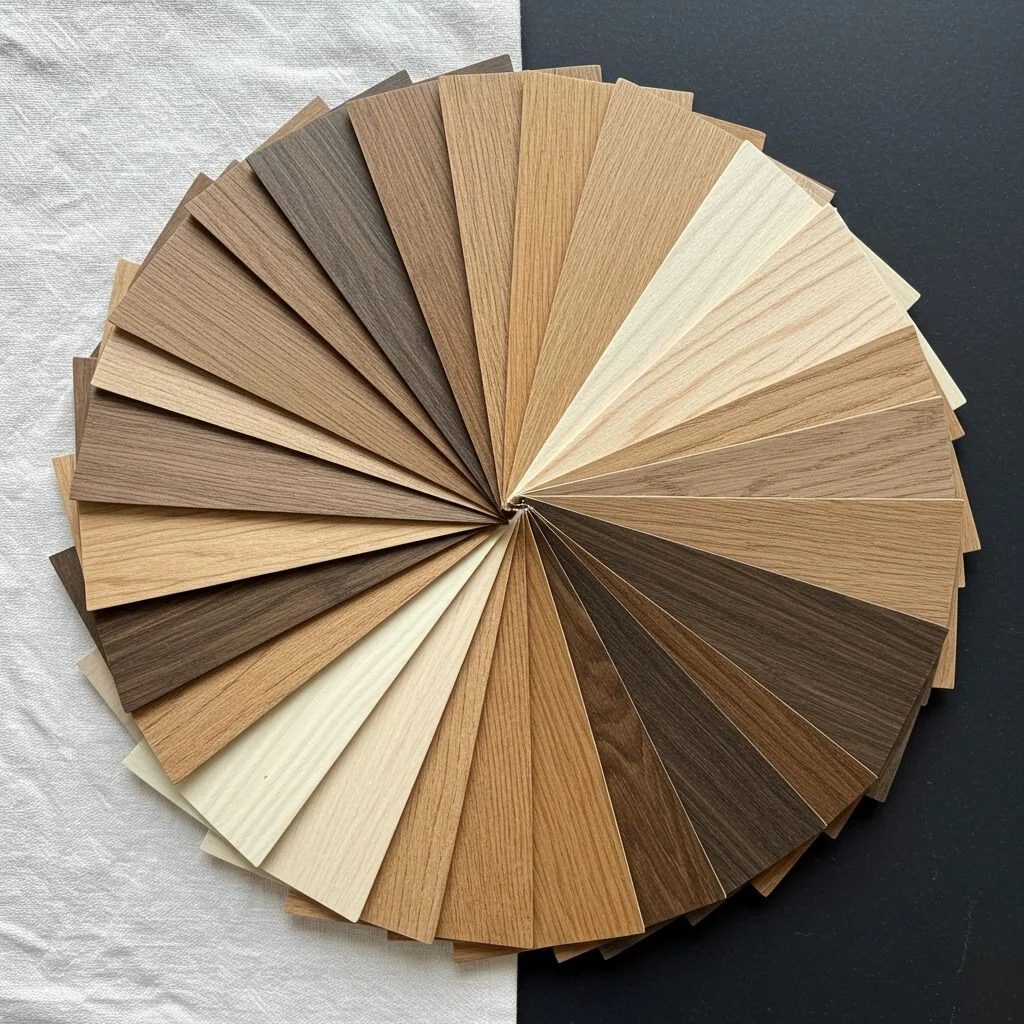
HPL is also the most versatile when it comes to surface finishes. It is available in gloss, matte, soft-touch, textured, wood grain, metallic, and now even digitally printed custom designs. This combination of performance and visual range makes HPL the default specification for most commercial projects, and the benchmark against which other laminate types are measured. When buyers talk about laminate quality, they are almost always talking about HPL.
LPL — Low Pressure Laminate
LPL, also called melamine-faced board or melamine laminate, is made through a completely different process. A decorative paper is impregnated with melamine resin and then directly fused to a substrate — usually MDF or particleboard — under lower pressure and temperature than HPL. The result is not a standalone sheet but a finished board with the laminate already bonded to the surface. This means LPL cannot be purchased as a separate sheet and applied to your own substrate — you buy it as a ready-made board.
The main advantage of LPL is cost. Because the laminate and board are produced together in a single step, the manufacturing process is faster and cheaper than producing HPL separately. This makes LPL the dominant material in the flat-pack and ready-to-assemble furniture industry. Wardrobe interiors, bookshelves, office desk carcasses, and kitchen cabinet boxes are all commonly made from LPL boards.
The trade-off is durability. LPL surfaces are more susceptible to edge chipping, moisture damage, and surface wear than HPL. The edges of LPL boards — where the laminate ends — need to be finished with edge banding to prevent delamination, especially in environments with humidity. For applications where the surface will be exposed to heavy use, heat, or moisture, HPL is the better choice. But for interior furniture components that are not high-contact surfaces, LPL offers excellent value and is entirely fit for purpose.
CPL — Continuous Pressure Laminate
CPL is a type of laminate that sits between HPL and LPL in terms of both manufacturing complexity and performance. It is made in a continuous production line where layers of paper are impregnated with resin and pressed together under heat and pressure using a rolling press — as opposed to the static plate press used in HPL production. The continuous process allows for faster, higher-volume manufacturing, and the result is a laminate that is more flexible and thinner than HPL.
CPL is most commonly used in flooring applications — specifically in laminate flooring, where sheets need to be manufactured in long continuous lengths and then cut to plank size. It is also used in wall panelling, door surfaces, and furniture edging. Its flexibility makes it well-suited for surfaces that need to wrap around curves or profiles, such as kitchen cabinet door edges or rounded furniture components.
In terms of performance, CPL is more durable than LPL but generally considered a step below standard HPL in scratch resistance and structural rigidity. For flooring applications, it performs excellently when protected by a proper wear layer on top. If your project involves large-format flooring, wall cladding, or any surface that benefits from a flexible laminate, CPL is the category to explore with your laminate manufacturers.
Compact Laminate — The Heavy-Duty Specialist
Compact laminate, sometimes called solid core laminate or compact board, is in a completely different performance category from the other three types. It is constructed using the same high-pressure process as HPL, but instead of bonding a few layers of paper to create a thin sheet, compact laminate is built from many more layers — sometimes 20 or more — to create a thick, solid panel that ranges from 2mm to over 25mm in thickness. The result is a self-supporting structure that does not need a substrate. It is the laminate itself.
Because compact laminate is solid all the way through, it has exceptional resistance to impact, moisture, bacteria, graffiti, and fire — properties that make it the first choice for the most demanding environments. Laboratory benchtops that must resist chemical spills, washroom cubicle partitions that need to handle constant humidity, outdoor furniture exposed to rain and UV, hospital surfaces that require antibacterial compliance, and sports facility changing rooms are all classic compact laminate applications.
Compact laminate is also used extensively in building facades and exterior cladding when combined with specific weatherproof variants — this is where it overlaps with the fire-rated and exterior-grade laminate category. Not all laminate manufacturers produce compact laminate. It requires a different production setup and quality control process, which is why it tends to be made by manufacturers who have specifically invested in this category. If compact laminate is part of your specification, make sure to verify that the manufacturer you are approaching actually produces it — and ask for compliance documentation before ordering.
Which Type Is Right for Your Project?
Choosing the right laminate type is not complicated once you understand the basics. Think about three things: the level of wear and stress the surface will experience, the environment it will be installed in, and whether you need a standalone sheet or a finished board.
- For high-traffic commercial surfaces, kitchens, and healthcare — HPL is the standard.
- For furniture interiors, shelving, and cabinet carcasses — LPL is practical and cost-effective.
- For flooring, wall panels, and curved profiles — CPL is the natural fit.
- For washrooms, outdoor use, laboratories, and facades — Compact Laminate is the right call.
Understanding this before you approach any supplier means you can have a more productive conversation, get accurate quotes faster, and avoid the frustration of receiving the wrong product for your application.
Side-by-Side Comparison: Key Laminate Types at a Glance
| Laminate Type | Thickness Range | Made As | Best Application | Durability Level |
|---|---|---|---|---|
| HPL | 0.6mm – 1.5mm | Standalone sheet | Kitchens, offices, healthcare | Very High |
| LPL | Board (9mm – 18mm) | Ready-made board | Furniture interiors, shelving | Moderate |
| CPL | 0.3mm – 0.8mm | Continuous roll/sheet | Flooring, wall panels, edging | High |
| Compact | 2mm – 25mm+ | Self-supporting panel | Labs, washrooms, facades | Exceptionally High |
How to Choose the Right Laminate Manufacturer for Your Project
Match Your Order Size to the Right Capacity Level
One of the most common mistakes buyers make is approaching a manufacturer whose production capacity does not match their order volume. A small-to-mid-sized Indian manufacturer may be perfect for an order of a few hundred sheets, but may struggle to deliver on schedule if you suddenly need tens of thousands of sheets for a large commercial project. Conversely, approaching a global giant like Kronospan or Wilsonart for a small residential order may mean you do not meet their minimum order requirements or get pushed to the bottom of their production queue.
For smaller domestic orders, Indian manufacturers like Merino or Century Laminates are typically the most practical choice. They are set up to handle smaller quantities, deliver quickly, and have strong distribution networks. For large-scale commercial or export orders, Greenlam and Stylam are well-equipped on the Indian side, while Wilsonart and Formica handle global-scale projects with ease.
Match Your Product Needs to the Right Specialization
Every manufacturer on this list does something particularly well. The key is matching that strength to what your project actually needs. There is no single best manufacturer — only the best manufacturer for your specific use case. Here is a simple way to think about it:
- For residential furniture, modular kitchens, and retail interiors, Merino and Century Laminates offer the widest decorative range at accessible lead times.
- For large commercial interiors, hotels, and corporate offices, Greenlam, Formica, and Wilsonart offer the combination of scale, certification depth, and finish quality that demanding projects require.
- For healthcare, cleanroom, or antibacterial surface requirements, Greenlam and Formica both have dedicated product lines built for these environments.
- For exterior cladding, building facades, or fire safety compliance, Fundermax is the specialist — no other manufacturer on this list matches their credentials in this area.
Understand What Lead Time Actually Means in Practice
Lead time is one of the most misunderstood elements of the laminate procurement process. When a manufacturer quotes you a lead time, that figure typically refers to the production window alone — it does not always account for shipping, customs clearance, or the time it takes for goods to reach your project site from the distribution warehouse. For imported laminates, port processing can add several additional days to the overall timeline.
Before placing any order, ask your supplier a few specific questions: whether the quoted lead time applies to stock items or custom production, whether they have buffer stock available for popular finishes, and what their contingency process is if there is a raw material shortage or production delay. These questions do not take long to ask, but the answers can reveal a great deal about how reliable a supplier will actually be when your project is under pressure.
A Simple Decision Framework
If you are still unsure which manufacturer to approach, this framework can help you narrow it down quickly:
- Need delivery in under three weeks? Merino and Kronospan consistently offer the fastest lead times.
- Need fire-rated or weatherproof exterior laminates? Fundermax is the clear specialist.
- Sourcing from India for export to international markets? Compare Greenlam and Stylam first.
- Need a luxury or custom-print finish for a premium project? Wilsonart and Formica lead in this category.
- Working on a mid-range project with standard specifications? Century Laminates offers strong value with reliable availability.
Expert Tips & Things Every Buyer Should Know in 2026
Always Verify Before You Commit
One of the most important pieces of advice for any buyer is to treat manufacturer claims with healthy scepticism until they are backed by evidence. Sales brochures and websites are designed to impress. Before placing a significant order with any manufacturer, ask for third-party test reports rather than just internal certifications. Request physical product samples and test them under conditions similar to your actual use case. Ask for references from two or three past buyers who have worked on projects similar to yours in scale and product type. A credible manufacturer will have no problem providing all of this.
It is also worth checking certifications directly on the certification body’s website rather than relying solely on what the sales team tells you. Certifications lapse, and not every sales representative keeps track of expiry dates. This is a small step that can save significant complications later in the project.
Sustainability Is No Longer Optional in 2026
The conversation around sustainable building materials has shifted significantly in recent years. What was once a “nice to have” is rapidly becoming a standard procurement requirement — especially for commercial projects targeting green building certifications such as LEED or IGBC. More architects, developers, and procurement teams are now asking for FSC-certified wood sourcing, GREENGUARD-certified laminates with low formaldehyde emissions, and documented sustainability policies from their suppliers before finalising any vendor selection.
If your project is pursuing a green building rating, or if your client has sustainability commitments to meet, make sure to raise these requirements early in the supplier selection process. Greenlam, Merino, Wilsonart, and Formica all have well-developed sustainability credentials. Fundermax and Stylam also carry relevant certifications for their respective product categories.
Key Industry Trends Shaping 2026 Purchases
The laminate industry is not standing still. A few trends are worth keeping in mind as you evaluate manufacturers and product ranges for your 2026 projects. Digital printing on laminates has moved from a niche capability to a mainstream offering, enabling truly custom surface designs at scale. Anti-fingerprint matte finishes have surged in popularity for kitchen and bedroom applications, and most major manufacturers now carry them in their catalogues.
Anti-bacterial laminates, which were largely confined to healthcare before 2020, are now being specified widely in hospitality, education, and public spaces. And thin laminates in the 0.5mm to 0.8mm range are growing in demand for refurbishment projects where adding minimal weight and thickness is a practical necessity.
Conclusion
Choosing the right laminate manufacturer is not simply a matter of picking the biggest brand or the one with the most attractive catalogue. It is about finding the company that can consistently deliver the right product, on the right timeline, at the right quality level — every time you place an order. And that process starts much earlier than most buyers realise: it starts with understanding exactly what type of laminate your project actually needs.
Once you know whether you need HPL, LPL, CPL, or compact laminate, the rest of the selection process becomes significantly cleaner. You can filter out manufacturers who do not produce what you need, focus your conversations on suppliers with the right specialization and capacity, and ask smarter questions about lead times and certifications. TheLuasa brings all of this together in one place — so you spend less time researching and more time building. TheLuasa has the right laminate for every project